





















Hubble Photographs Messier 96 for the third time
Aug 25, 2025
Soumyadeep Mukherjee
Soumyadeep Mukherjee is an award-winning astrophotographer from India. He has a doctorate degree in Linguistics. His work extends to the sub-genres of nightscape, deep sky, solar, lunar and optical phenomenon photography. He is also a photography educator and has conducted numerous workshops. His works have appeared in over 40 books & magazines including Astronomy, BBC Sky at Night, Sky & Telescope among others, and in various websites including National Geographic, NASA, Forbes. He was the first Indian to win “Astronomy Photographer of the Year” award in a major category.
Share:

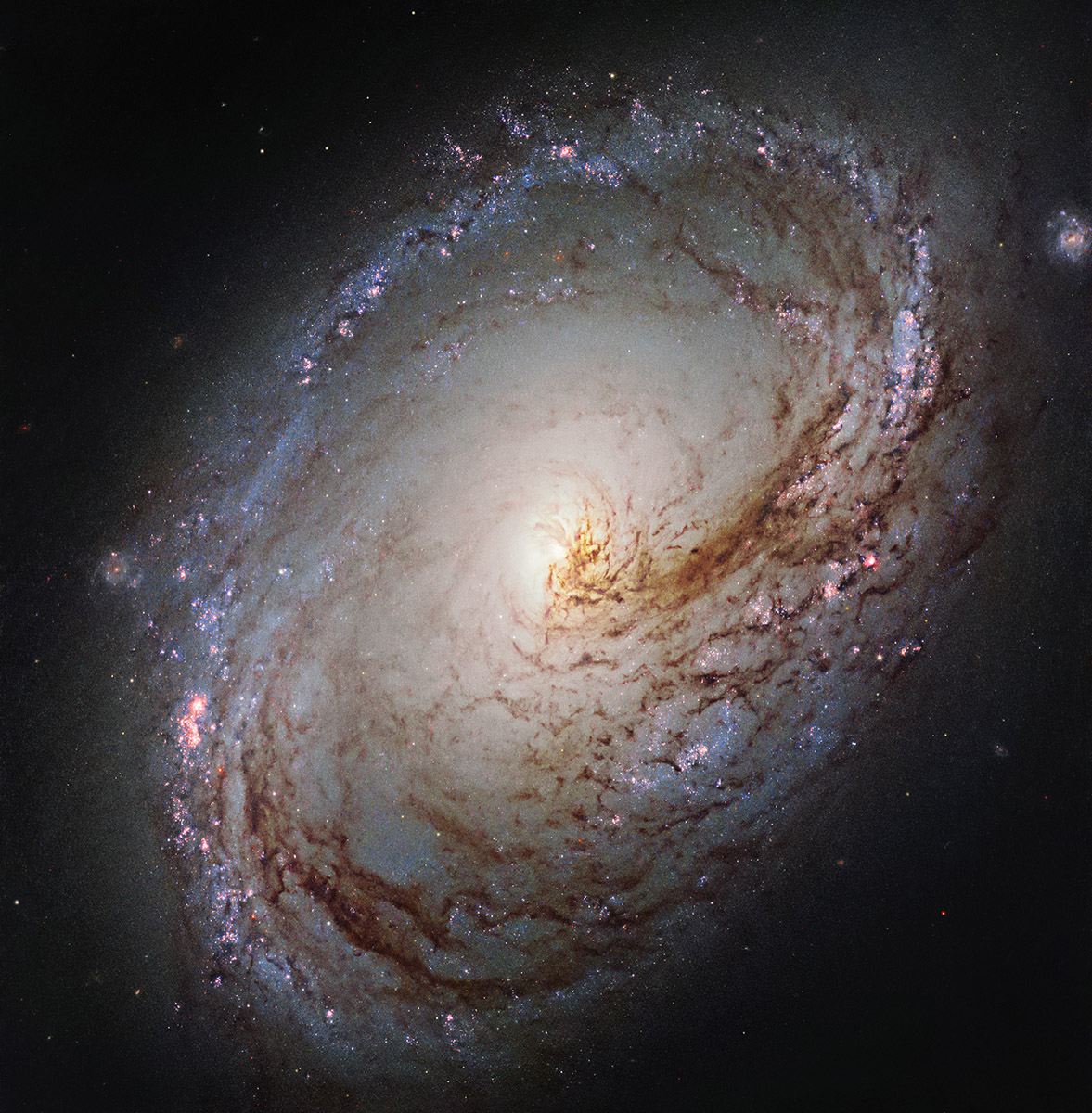
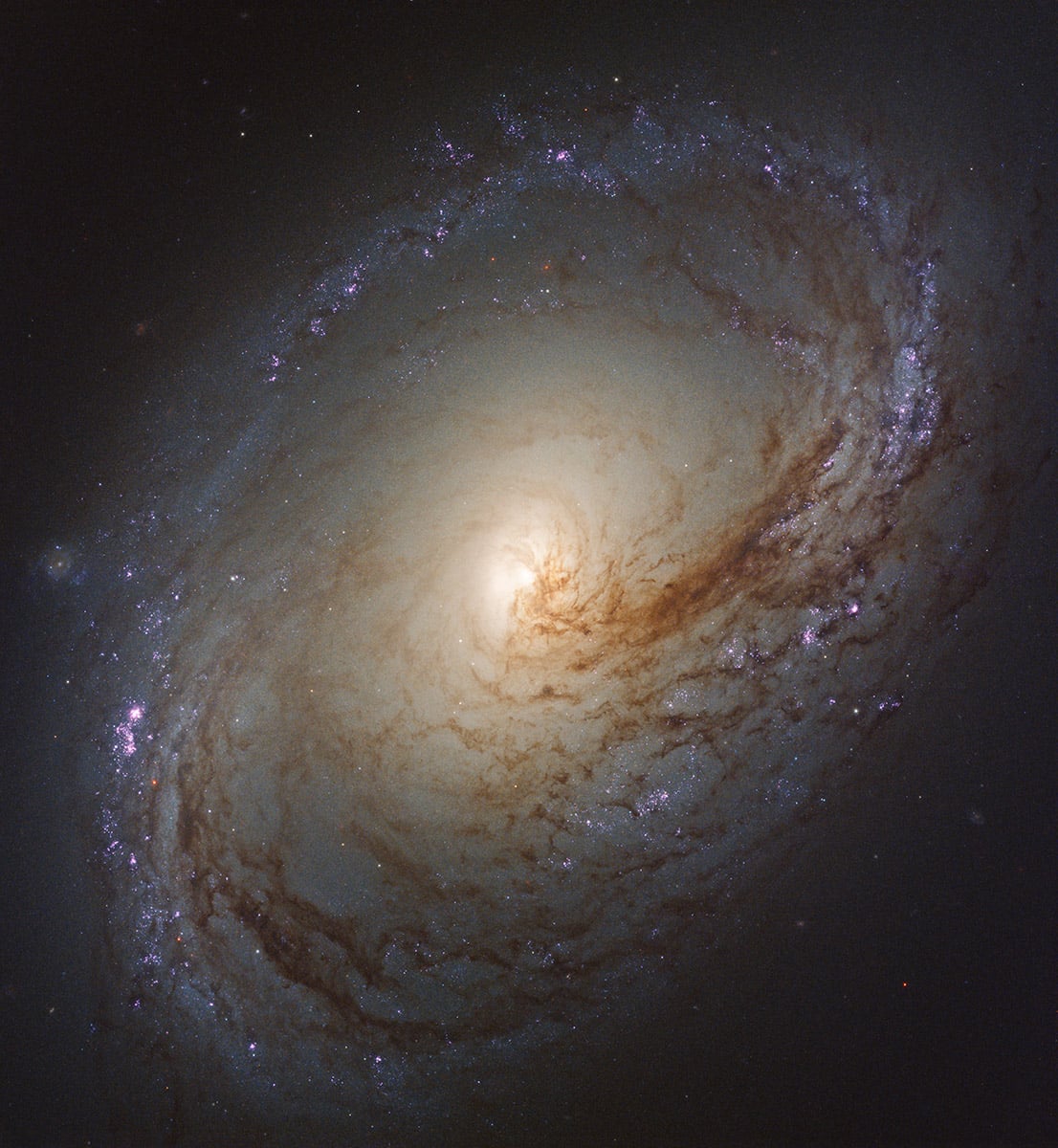
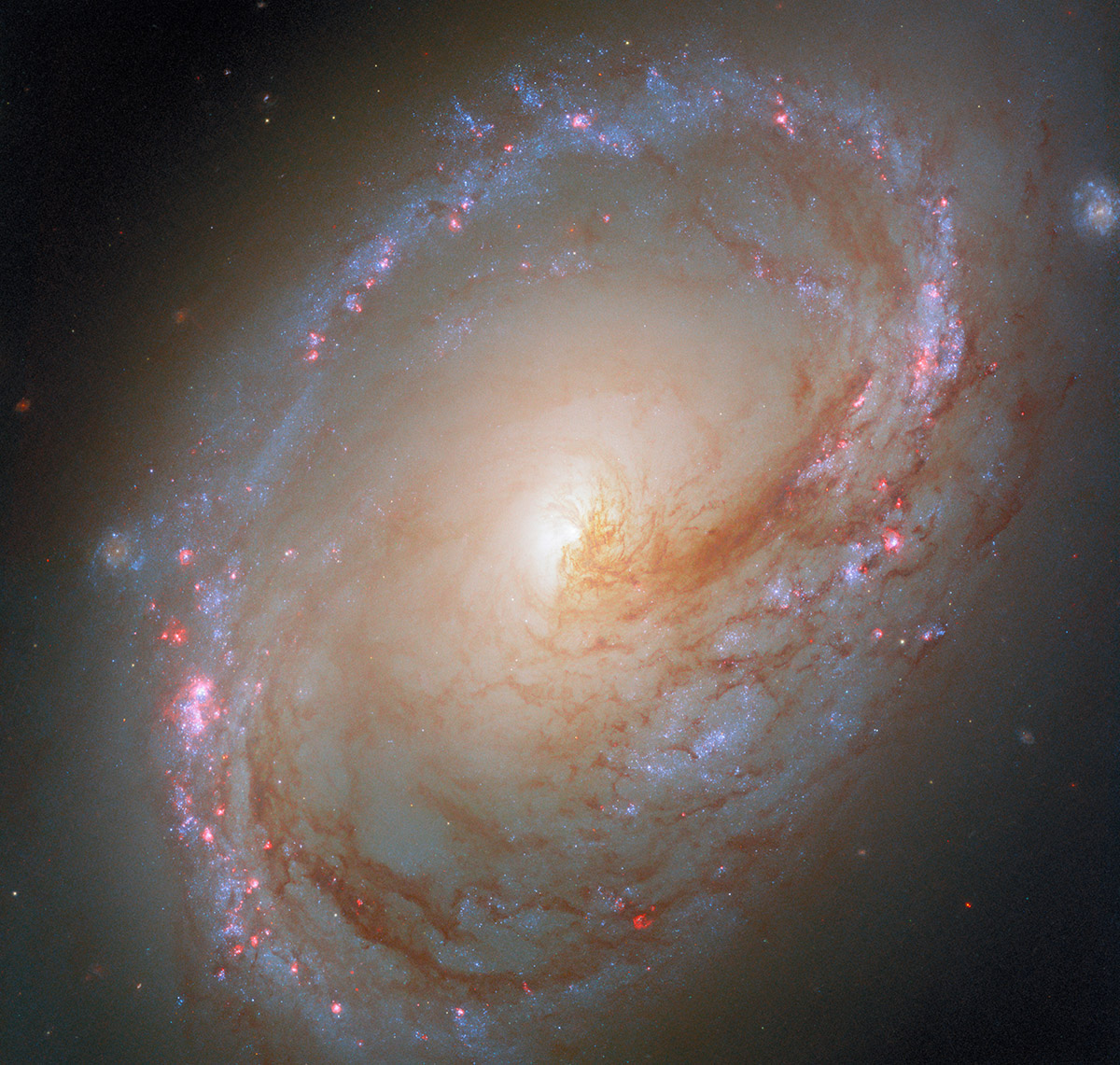
Messier 96 is one of those galaxies that look familiar at first sight. It has the broad disk and graceful spiral arms that we associate with many spiral galaxies. Yet when astronomers study it more closely, the picture becomes less ordinary. Its spiral arms are uneven, its core is not quite centered, and the distribution of its gas and dust is irregular. These features hint at a more complicated past, one shaped by gravitational interactions with neighboring galaxies. The latest image from the NASA/ESA Hubble Space Telescope brings this complexity into focus once again. The galaxy lies about 35 million light-years away in the constellation Leo. It is the brightest member of the Leo I Group, a small collection of galaxies bound together by gravity. In this new view, astronomers combined ultraviolet and optical data to highlight regions where stars are forming. The result is both scientifically revealing and visually striking, showing a galaxy that is still actively shaping itself.
Three views across the years
Hubble has turned its gaze toward Messier 96 several times before. Previous images were released in 2015 and 2018, each offering a different angle on the galaxy’s character. The new 2025 release is the third major presentation, and it brings in fresh ultraviolet data. Ultraviolet light is particularly useful because it traces hot, young stars. When these stars form, they emit strongly in this part of the spectrum. By including these observations, astronomers can more clearly map the areas where new stars are being born.
In the new composite, pink regions stand out along the outer edges of the spiral arms. These are bubbles of gas illuminated by clusters of young, massive stars. The blue-white glow of older star populations fills the spiral arms, while dark filaments of dust snake across the galaxy’s face. The combined view shows how unevenly star formation proceeds across Messier 96. Unlike the neat, symmetrical spirals often seen in textbooks, this galaxy reveals the marks of outside influences.
Shaped by gravitational encounters
Why does Messier 96 look so lopsided? The main explanation is its environment. Galaxies rarely exist in isolation. They usually sit in groups or clusters where their mutual gravity shapes their evolution. Messier 96 belongs to the Leo I Group, which also includes Messier 95 and Messier 105. These companions are close enough to tug at one another over long timescales.
Such gravitational encounters do not necessarily result in collisions, but even distant interactions can twist spiral arms, shift gas clouds, and displace galactic cores. Astronomers believe this is what has happened here. The uneven spiral arms and off-center nucleus are evidence that Messier 96 has been pulled and stretched by its neighbors. These interactions may also funnel gas into new regions, setting off bursts of star formation like those visible in Hubble’s new image.
A laboratory for star formation
Messier 96 is a useful target for astronomers who study how stars are born. The galaxy is close enough, at 35 million light-years, to resolve many of its individual regions. It is also active, with multiple pockets of ongoing star formation. Ultraviolet observations allow researchers to map where the youngest stars are concentrated, while optical and infrared data reveal the surrounding older populations and the dust clouds that shield them.
This approach gives a more complete view of stellar evolution in a single galaxy. For example, the pink bubbles captured in the Hubble image mark areas where massive stars have recently formed. These stars emit strong ultraviolet radiation that ionizes the surrounding hydrogen gas, making it glow. Over time, the winds and radiation from these stars will blow away the gas, halting further star formation in those pockets. By studying galaxies like Messier 96, astronomers can track these processes in detail and compare them across different environments.
Messier 96 may not be as famous as the Andromeda Galaxy or the Whirlpool Galaxy, but it tells an equally important story. Its asymmetry, its displaced core, and its uneven star formation all point to the role of gravitational interaction in shaping galaxies. By taking a third look at Messier 96, astronomers are piecing together the history of a galaxy that refuses to conform to a neat, symmetrical model.
Clear skies!
See more from DIYPhotography.net on Google
Add DIYPhotography.net as a trusted source. This makes
our stories more likely to appear in your Google Search results.
 Add as a preferred source on Google

Soumyadeep Mukherjee
Soumyadeep Mukherjee is an award-winning astrophotographer from India. He has a doctorate degree in Linguistics. His work extends to the sub-genres of nightscape, deep sky, solar, lunar and optical phenomenon photography. He is also a photography educator and has conducted numerous workshops. His works have appeared in over 40 books & magazines including Astronomy, BBC Sky at Night, Sky & Telescope among others, and in various websites including National Geographic, NASA, Forbes. He was the first Indian to win “Astronomy Photographer of the Year” award in a major category.


Join the Discussion
DIYP Comment Policy
Be nice, be on-topic, no personal information or flames.