





















This is the true resolution of film is… well, it’s complicated
Aug 16, 2024
John Aldred
John Aldred is a photographer with over 25 years of experience in the portrait and commercial worlds. He is based in Scotland and has been an early adopter – and occasional beta tester – of almost every digital imaging technology in that time. As well as his creative visual work, John uses 3D printing, electronics and programming to create his own photography and filmmaking tools and consults for a number of brands across the industry.
Share:

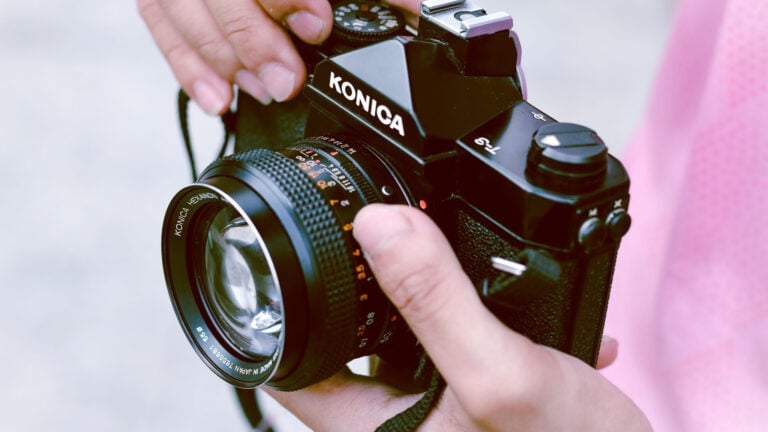
This is a debate that’s been going on since digital SLRs first became a thing. Twenty-five years ago (even as recently as 10-15 years ago), I heard people saying they weren’t switching to digital because it wasn’t as “high resolution” as 35mm film and certainly not medium format.
But things changed. Now, digital is generally the way to go. But people still argue film is sharper. So, what is the true resolution of film? In this video, ShyStudios takes a deep dive into this topic. How does it really stand up to digital?
What is the true resolution of film?
For film photographers, searching for the ideal scanner can be quite the pursuit. Many of us have tried several scanners before settling on one that actually gives us the quality we expect (I always quite liked the Epson Perfection V750/700). Some simply opted to have the lab do it on their Hasselblad drum scanners.
But how good can we get out of film? And what is “resolution” in this case? Well, that’s a little complicated to answer. It’s not as straightforward as digital resolution, because film just isn’t digital.
The video is an extremely technical look at precisely what resolution is. The simple fact of the matter is that film doesn’t have “resolution” in the digital sense. So, we can’t really look at it in quite the same way.
It’s difficult to quantify the entire twelve-and-a-half-minute video in a couple of sentences, but trying to compare them on a strictly resolution-only scale is a bit of a waste these days. The bottleneck with most modern cameras is typically the lenses, not the resolving power of the sensor.
Both perform well
Either film or digital would perform admirably from an image-quality standpoint for the needs of 99% of people. And while images from today’s high-resolution flagship sensors might exceed the resolving power of 35mm negatives, film is also available in larger sizes.
Ok, sure, 4×5″ large-format film will give an objectively higher-resolution image than a full-frame mirrorless camera – possibly even medium format. But unless you’re taking advantage of the optical benefits of such a large film plane, what’s the point? How big do you need to print it?
And hey, you can always utilise both. Plenty of people use their DSLRs to scan their film slides and negatives. It’s often a lot quicker than using a flatbed and yields quality that’s perfectly suitable in most cases.
But for best results, with film, you’ll want an enlarger and a darkroom.
See more from DIYPhotography.net on Google
Add DIYPhotography.net as a trusted source. This makes
our stories more likely to appear in your Google Search results.
 Add as a preferred source on Google

John Aldred
John Aldred is a photographer with over 25 years of experience in the portrait and commercial worlds. He is based in Scotland and has been an early adopter – and occasional beta tester – of almost every digital imaging technology in that time. As well as his creative visual work, John uses 3D printing, electronics and programming to create his own photography and filmmaking tools and consults for a number of brands across the industry.



Join the Discussion
DIYP Comment Policy
Be nice, be on-topic, no personal information or flames.