




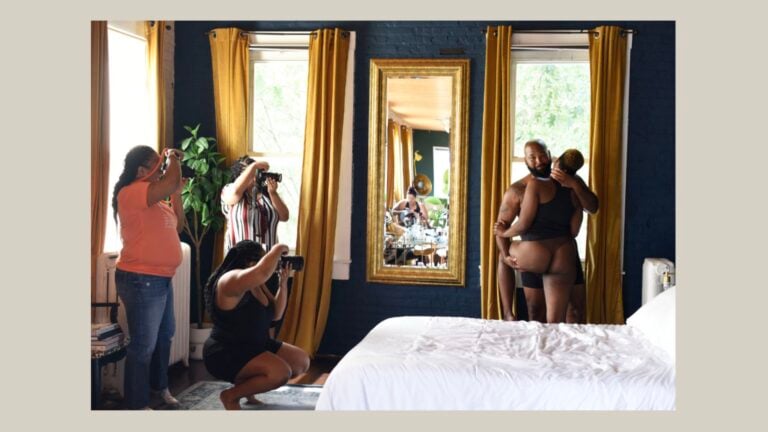
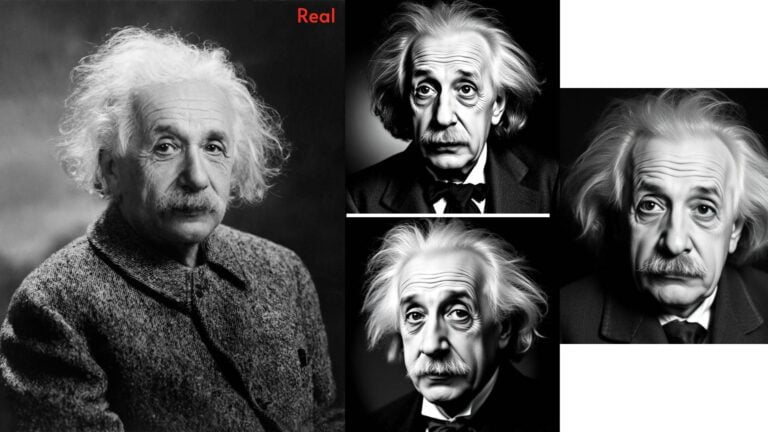









This is how light hit a subject in a portrait, nano second by nanosecond
Aug 20, 2016
Udi Tirosh
Udi Tirosh is an entrepreneur, photography inventor, journalist, educator, and writer based in Israel. With over 25 years of experience in the photo-video industry, Udi has built and sold several photography-related brands. Udi has a double degree in mass media communications and computer science.
Share:

We always talk about how light hits a portrait in a certain way, but we never actually see how the light hits a portrait, one second its dark and then in the next second it’s lit. There is no hitting.
Well, here is how light actually hits a portrait. Of course you can not actually film how light travels, you would need a shutter speed of 1/<speed of light>, not to mention the insane triggering system you’d need.
But the folks at SEEC photography have the technology to video how light travels.
With this technology, SEEC are able to actually video light as it hits the subject. I mean you can actually see how light hits the hands, then advances on the body, hits the tip of the nose, then progresses to hit the backdrop.
Here is how they do it
Most objects we see because light that is scattered off those objects reaches our eye and is imaged onto our retina. If we have a pulsed light source, one that we can switch on and off very fast, then we only see the object during the short time in which the pulsed scattered light reaches our eye (or our camera). The distance between light source, object and detector will determine the time at which the scattered pulse reaches the eye (or the camera). Objects that are further away from the source and detector will be imaged at a later time.
In the animation this means that light scattered from object 1 will arrive at the detector earlier than light scattered from object 2. As light travels at a high speed it needs a very short pulse of light and a high speed camera to record that effect.
In fact light travels at a fast but finite speed of 299 792 458 meters per second. In astronomy this often leads to measurable delays due to the large distances between stars, planets and galaxies. For example, it takes light about 8 minutes and 20 seconds to travel from the sun to the earth. However, it takes only 3 billionths of a second (0.000 000 003 seconds) for light to travel the distance of one meter, which is why we never experience the movement of light in our daily lives. Our sense of vision is simply not fast enough.
With the help of modern technology we can take pictures with exposure times as short as 0.1 billionths of a second. This allows us to record the movement of light across a subject. Light is now more than illumination, it becomes the protagonist of our images, we can literally watch light write an image


Udi Tirosh
Udi Tirosh is an entrepreneur, photography inventor, journalist, educator, and writer based in Israel. With over 25 years of experience in the photo-video industry, Udi has built and sold several photography-related brands. Udi has a double degree in mass media communications and computer science.




Join the Discussion
DIYP Comment Policy
Be nice, be on-topic, no personal information or flames.
4 responses to “This is how light hit a subject in a portrait, nano second by nanosecond”
“In fact light travels at a fast but finite speed” that is debatable. How do you think chromatic aberration happens.
Very interested in your comment Stormy Llama.
I always thought chromatic aberration was due to an imperfect lens not focusing the different wavelengths at the same focus point? The waves still hit the lens at the same speed?
Your comments much appreciated. :)
Stormy, finite does not define speed. The speed of light through a medium (air, glass) is slower than in the vacuum of space. Furthermore, varying wavelengths of light (colors) behave slightly differently when passing through a medium, more so at at angles of incidence other than perpendicular. Light travels slower through glass than the atmosphere. Each color of light passing through different layers is affected a little bit differently, which results in the colors being separated. A prism is built to demonstrate this, a lens is built to minimize it. This is done in part with surface treatment on the lenses. Cbenci, you have it right.
Yep glass is a capacitor, I don’t agree with chenci with light being waves of anything nor partials.