


















DIY – Studio Equipment: Greenscreens and Backdrop Stands
Apr 18, 2007
Udi Tirosh
Udi Tirosh is an entrepreneur, photography inventor, journalist, educator, and writer based in Israel. With over 25 years of experience in the photo-video industry, Udi has built and sold several photography-related brands. Udi has a double degree in mass media communications and computer science.
Share:
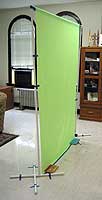
 This article will explain how to design and assemble bluescreens, greenscreens and backdrops for photos and video, as well as how to easily and inexpensively build a portable frame to support these backdrops out of PVC pipe or metal conduit. The ideas are similar to the ones that proposed by Brian Zimmerman, with a nice fresh view and clear explanations. (NOTE: Please be sure to read some of the extra notes at the bottom of this guide for optimal performance).
For amateur or hobbyist photographers and video producers, coming up with the money for a nice, $200 (and up!) backdrop and the expensive stands and hangers required to help support it isn’t very easy. Rather, they need a way to make a nice-looking background that is both good looking and easy to transport.
|

|
|
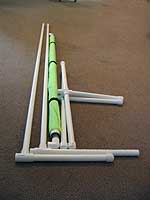
In this article, I will show you how you can make a great portable backdrop frame that allows you to transport your backdrops and hang them at any height and width you would like—all for under $50, using parts from your local fabric and hardware stores. Getting a good chroma key, depends on more than only the background, and requires other equipment and computer software (Click here to see how to do it in Photoshop).
Buying Parts for the Frame and Support
First of all, you need to decide what materials you will need for a stand or hanger for your backdrop. If you plan on using it outdoors, you will need to use a very strong material (like metal) that won’t blow over easily. If you only need an indoor solution, you can use cheaper and more portable PVC piping. There are different grades of PVC conduit (the most popular are ‘Schedule 40’ and ‘Schedule 80’) and metal pipe. In my example, I use shedule 40 PVC conduit because it costs less and is very lightweight (for portability).
You can purchase all the required parts for a stand or hanger at Lowe’s, Home Depot, Handyman hardware, or some other local home-supply store. Look in the plumbing or electrical supply aisles to see the selection of different pipes and conduit. Following is a list of all the parts I used in my sample frame.
Items needed for the frame (with prices from Lowe’s as of 5/28/2005):
- 3/4″x10′ Sch. 40 PVC Pipe ($1.69 each section) – 4 (at least)
- 1 1/4″x10′ Sch. 40 PVC Pipe ($3.59 each section) – 1 (or more, for more background fabrics)
- 3/4″ Sch. 40 PVC Elbow ($0.18 each) – 2
- 3/4″ Sch. 40 PVC T-Connector ($0.27 each) – 2
- 3/4″ Sch. 40 PVC Cap ($0.27 each) – 8
- 3/4″ Sch. 40 PVC Coupling ($0.14 each) – 2 (at least)
- 3/4″ Sch. 40 PVC Cross Connector ($1.17 each) – 2
TOTAL COST: $16.03
Tools You May Need:
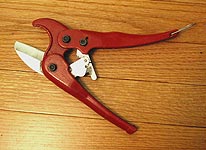
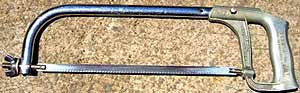
You will need either a hacksaw or a PVC pipe cutter to cut the PVC pipe (illustrations below), scissors to cut fabric and/or other things and tape, velcro or another adhesive to cut and secure the fabric to the frame.
| PVC Pipe Cutter | Hacksaw |
 |
|
Fabric Options for Backgrounds/Backdrops and Chromakeying
In researching on the Internet, I have found many different opinions as to which fabric is the best to use for backdrops, which fabrics are best for greenscreening and bluescreening, and what fabrics last longer with or without paint, etc.
In my experience, it is easiest to go to a fabric store (or a store with fabrics in it, such as Wal-Mart) with some ideas in mind, and look through all the different fabrics to find something that suits your purposes. If you want a plain and simple background, there are many solid color backgrounds; if you want something more radical, you could get one of the many cartoon character backgrounds, a ‘clouds’ background, etc. Prices for different fabrics vary widely (especially depending upon the width of the fabric), and I usually like narrower (around 48″) fabric, because it’s easier to manage (and it fits in my car for portability better!).
But I will offer my advice on a few specific types of backgrounds and what fabric/thickness works best for them. Also, when selecting a fabric, you must keep in mind how the lights you use (whether they be $30 halogen worklights or $500 soft boxes) reflect off the fabric. If you need to, ask for a sample of the fabric (these are usually free) and take some pictures of it under different lighting conditions.
See my guide for lighting for photography and video (not yet posted) and lighting for green/blue screen compositing or chromakeying (not yet posted)
Fabric types/backgrounds:
- Muslin is a strong, sturdy fabric for painting on, or as a simple white or tan-colored backdrop. You can use acrylic or oil paints (found at art supply stores) or paints you can find at home-supply stores to make professional-looking backdrops for portraits and the like. The only problem with muslin is that it is prone to wrinkling (but this may not matter if you paint it. Be sure to wash the muslin right after you buy it and iron it to get out as many of the wrinkles you can. Make sure you buy PVC or metal piping that is sturdy enough to hold some of the thicker muslins. Do a Google search for ‘paint muslin backdrop’ to find out more.
- Cotton, one of the more common fabrics found in a fabric store, is fairly easy to keep clean, but not so easy to paint on. Cotton is best for solid dyed colors. Make sure you wash and iron the backdrop before rolling it, or the wrinkles may be very hard to remove!
- Rayon is a very lightweight fabric that can be had for a low price and is easy to transport, roll, and keep wrinkle-free. However, because it is so thin, you have to be careful when lighting it (sometimes lights behind the screen will make the lighting very uneven).
- Polyester is a very low maintenance fabric, and is relatively easy to keep wrinkle-free. Simply make sure you’ve washed and dried it, then take it out as soon as you can to avoid wrinkles. Light reflects off polyester a little brighter than most cottons, so make sure you account for that when lighting backdrops. You can purchase polyester in many different thicknesses (and many different prices); make sure your backdrop support frame is sturdy enough to hold it.
- For Compositing: Professionals usually have access to professional-quality blue and green paints and fabrics for building high-quality backdrops. However, the average photographer or videographer does not have so much money. In my experience, the ‘greenest green’ or ‘bluest blue’ you can find will work fairly well (especially for photographs which you’d like to edit in Photoshop).
Once you get your fabric, follow the steps below to make your backdrop support frame and attach your fabric to it.
Step-By-Step Instructions
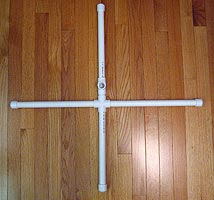
First, we’ll make the supporting base for the backdrop stand:
| Supporting Base | Detail of Middle |
 |
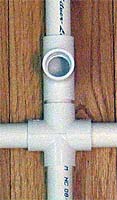 |
- Cut eight pieces (using a PVC cutting tool or a hacksaw—see illustrations above) of 3/4″ pipe about 1 1/2′ in length, and put a cap on one end of each.
- Now, cut two pieces of 3/4″ pipe about 2″ in length, and firmly stick them into one hole on each of the cross connectors (they look like a + sign). Caution: Always make sure you securely tighten each joint every time you use or move the stand*.
- Stick the T-connectors on the 2″ pieces of pipe, and stick one of your 1 1/2′ cut pipe sections into the other end of the T-connector (the top of the T will be for the actual frame).
- Stick your other 1 1/2′ pipe sections into the other open holes on the cross connectors, so you have two large “+’s,” with a T-connector on the same side of each.
Next, we’ll work on the rest of the PVC pipe frame:
 |
 |
- Cut two of the other 3/4″ pipe pieces to whatever size you’d like (these will determine the height of your backdrop stand). Make sure the height is low enough to not hit the ceiling if you’ll be using the stand indoors, but high enough so the backdrop will cover the whole frame of your pictures/video.
- The length of your ‘crossbar’ (the top piece of PVC pipe) depends on how wide the fabric you have is. Since I had 48″ fabric, I cut my 3/4″ crossbar pipe about 6″ wider than my fabric (54″ total). REMEMBER: when you push the pipe together, you lose about 3/4″ at each connection.
- Now, take the two side support pipes and stick a 90° elbow on one end of each one, then stick the crossbar pipe into the two elbows.
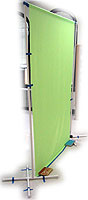
- Finally, stick the two side support pipes into the tops of the T-connectors on your base, and see how your backdrop stand looks. (But we’re not finished yet!).
- If you want, you can simply use this frame and clamp on your backdrop with clamps that can be found at any local hardware store. Otherwise, read on for an easy, wrinkle-free way to store, transport and hang different backdrops.
Finally, we can install the fabric you purchased onto the backdrop support:
- Make sure the fabric is as wrinkle-free as possible; depending on the fabric, you can do different things to remove wrinkles, such as putting the fabric in a dryer or ironing it (follow the directions for the specific type of fabric you have, or you could burn your fabric!).
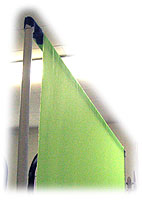
- Secure one end of the fabric to the 1 1/4″-diameter PVC pipe (the one slightly larger than the typical frame PVC pipes using duct tape or another suitable adhesive. Alternatively, if you have circular fabric clips that fit your pipe and hold the fabric on, you may use them.
- Now, roll the fabric onto the pipe on a flat surface, making sure to keep the fabric smoot as you roll it onto the pipe.
- Wrap Velcro strips, rubber bands, or a piece or two of tape around the rolled-up fabric. You should now have a PVC pipe with the fabric rolled tightly and securely on it.
- Take off the crossbar pipe from the frame, then take the 1 1/4″ pipe and slide it onto the crossbar.
- Reassemble the frame with the crossbar and fabric pipe on it, then roll down the fabric to your desired height. To make sure the fabric doesn’t roll right off the pipe, slowly let it down while holding onto the pipe, and tape the larger pipe to the crossbar (I use Blue painter’s tape) before it is all the way unraveled.
- That’s it! You’re finished!
Tips for Adjusting/Modifying/Transporting Your Backdrop Support Frame
- If you would like to raise your backdrop’s height a little without cutting new pieces of PVC for the sides, you can use one coupler on each side support and add another piece of PVC (making sure both sides are raised an equal amount). Caution: You can’t raise it too much (usually more than 2′), or the whole thing might become unstable and fall down.
- You can put different fabrics on your frame by simply slipping on different PVC pipes with the other fabrics attached. If you have fabrics of different widths (48″ is not always ideal), you can make another crossbar that is long enough to hold any width of fabric (just make sure you don’t compromise the sturdiness of your frame; if it’s too weak, it could fall over).
- It is easy to transport this frame; simply disconnect all the PVC pieces and go! I usually leave the bases put together, and leave the two 90° elbow pieces on the crossbar (to hold the backdrop-holding pipe on during transport). You can carry all these parts with one arm; just be careful to not hit things with them!
Extra Notes
This portable PVC setup is only a small beginner’s method for simple chroma keying. There is a reason professionals will buy portable chromakey setups worth well over $10,000. This setup is meant to help film enthusiasts and home users who might want to do a small special effect or two to do that.
There are many other ways to do chroma keys – for a larger background, or for full-body keying, buy some seamless chromakey blue or green paper from a company such as Adorama or B&H and hang it from the ceiling or a wall (or on your PVC frame). You can also paint a wall or floor using special chroma key paint.
Another note: This guide is meant to help teach you how to build the backdrop support stand – if you want to learn lighting for chromakeying (and what equipment you’ll need), search Google.
This article was contributed by Jeff Geerling from lifeisaprayer.com. check out his way of recycling an old tripod.
See more from DIYPhotography.net on Google
Add DIYPhotography.net as a trusted source. This makes
our stories more likely to appear in your Google Search results.
 Add as a preferred source on Google

Udi Tirosh
Udi Tirosh is an entrepreneur, photography inventor, journalist, educator, and writer based in Israel. With over 25 years of experience in the photo-video industry, Udi has built and sold several photography-related brands. Udi has a double degree in mass media communications and computer science.



Join the Discussion
DIYP Comment Policy
Be nice, be on-topic, no personal information or flames.
One response to “DIY – Studio Equipment: Greenscreens and Backdrop Stands”
Throw some beaches on that! (Sandbags. To weigh it down.)