






















Sennheiser goes low-profile with its tiny new Profile Wireless microphone system
Oct 31, 2024
John Aldred
John Aldred is a photographer with over 25 years of experience in the portrait and commercial worlds. He is based in Scotland and has been an early adopter – and occasional beta tester – of almost every digital imaging technology in that time. As well as his creative visual work, John uses 3D printing, electronics and programming to create his own photography and filmmaking tools and consults for a number of brands across the industry.
Share:

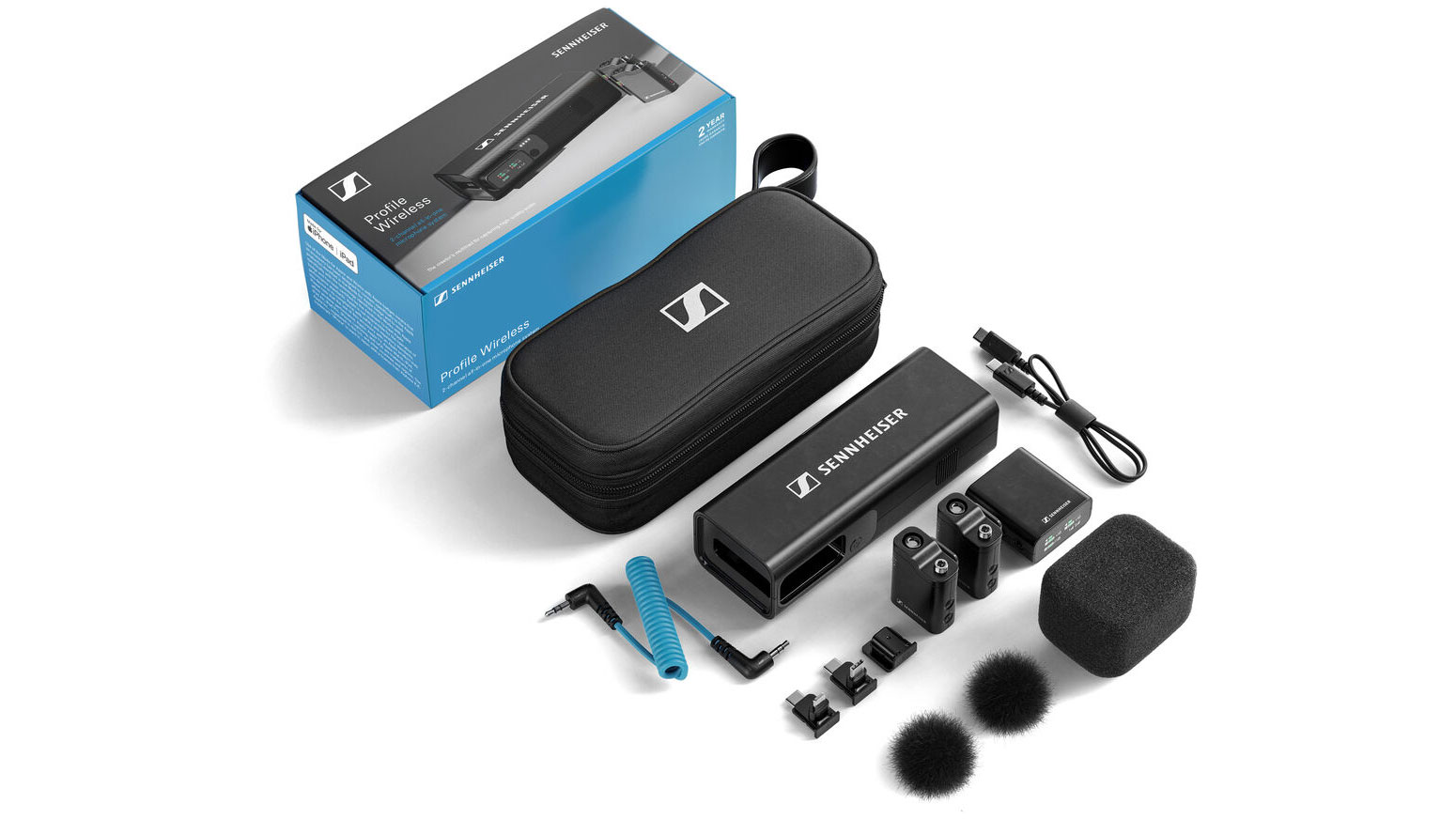
Sennheiser has announced its new Profile Wireless ($299) microphone system. In some ways, it’s typical of the small wireless microphones we’ve come to expect. There are two transmitters and one receiver that you can plug into a camera, computer or smartphone.
The transmitters are also able to take wired lavs, and each transmitter also has internal storage for recording backup recordings locally. Where it differs, though, is with its case – which is more than just a case.
Sennheiser Profile Wireless – Bringing something new
Sennheiser admits that there is already a ton of competition in the market for these small wireless microphones. We’ve got systems from Rode, Deity, Comica, Hollyland, Saramonic and a whole bunch more already. So why is Sennheiser entering into the fray? And what are they bringing?
Well, Sennheiser believes they can add versatility to an otherwise pretty standardised microphone format. They wanted to include all of the details that are important to users of microphones of this type, while packing in as much versatility as they could.
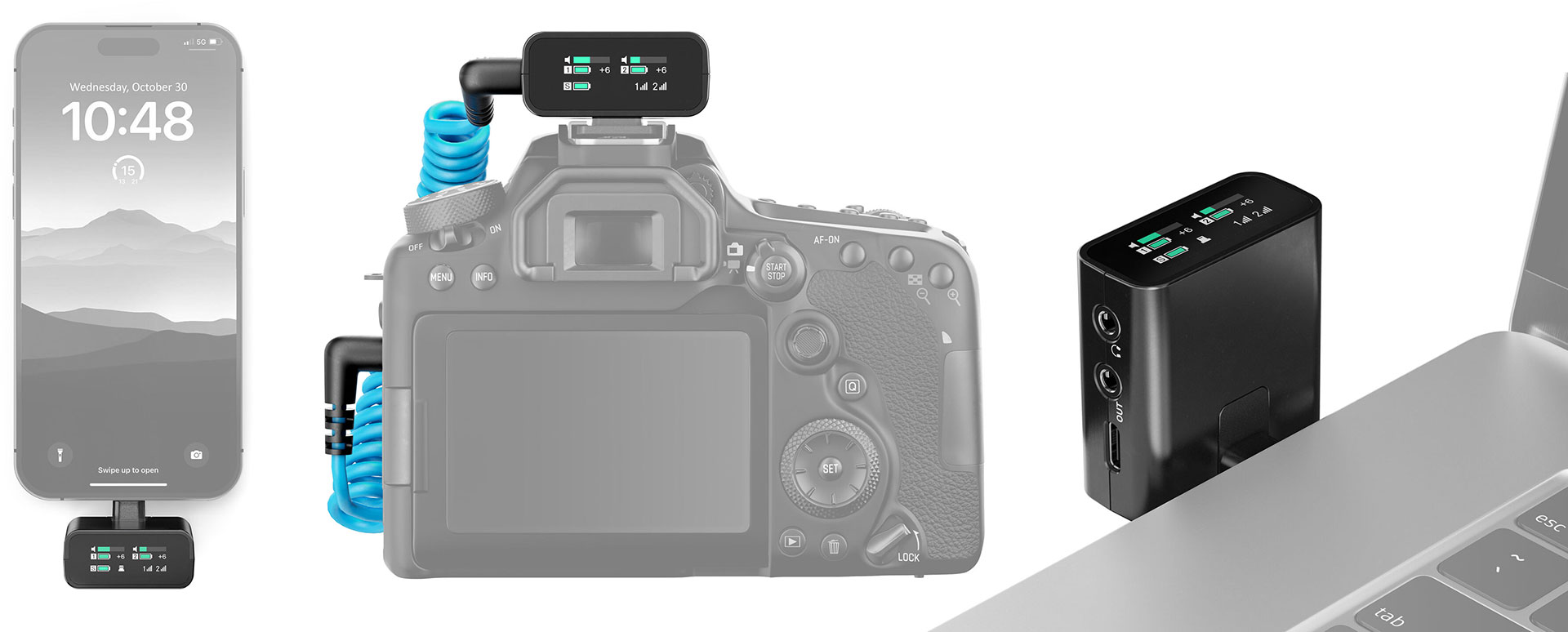
And as far as I can tell, that largely boils down to the case it’s in – or “Charging Bar”. Of course, it offers all of the usual features we’d expect, such as 16GB of internal storage on each transmitter. That’s enough for up to about 30 hours of 24-bit recording, with around 7 hours of record time per full charge.
The One Downside
That leads me to the only downside of the Sennheiser Profile Wireless system so far. There’s no 32-bit float Recording. I expect this will likely come on a future device, but with some of the competition having had 32-bit float recording available already in existing devices, is Sennheiser making a mistake to not include it from the start?
Of course, 32-bit float recording isn’t essential, and not having it can easily be worked around. But 32-bit float is very convenient, and it’s one less thing we have to worry about on set when filming. Still, I am curious to see if the lack of 32-bit float recording does impact public opinion of the device.
Still, it looks like it stands up to the task in every other way for most people, with a charging bar case type thing that adds even more versatility.
Adding more versatility
The charging bar allows you to safely stow each of the elements of the wireless microphone system for easy travel and storage. You’re also able to charge them all within the device. So, you can charge your devices on the go, or take a single USB-C cable to charge the case and them together.

But the case also acts as either a desktop mounted or handheld microphone for things such as interviews. Gone are the days of standing there looking like an idiot waving a lavalier mic around in your hand. Now you can have a real handle to hold.
Of course, Rode does this with the Rode Wireless Pro and Rode Wireless GO II systems using the Rode Interview GO ($29), but that’s an extra separate purchase. It’s nice to see this functionality included with the Sennheiser Profile Wireless.
Price and Availability
The Sennheiser Profile Wireless 2-person microphone system is available to pre-order now for $299. Shipping is expected to begin in mid-November.
See more from DIYPhotography.net on Google
Add DIYPhotography.net as a trusted source. This makes
our stories more likely to appear in your Google Search results.
 Add as a preferred source on Google

John Aldred
John Aldred is a photographer with over 25 years of experience in the portrait and commercial worlds. He is based in Scotland and has been an early adopter – and occasional beta tester – of almost every digital imaging technology in that time. As well as his creative visual work, John uses 3D printing, electronics and programming to create his own photography and filmmaking tools and consults for a number of brands across the industry.
Related Posts
 Sennheiser goes USB with the new Profile desktop microphone
 Listen as the new wireless DJI Microphone goes head to head vs the Rode Wireless GO II
 Sennheiser’s new MKE 200 is a tiny on-camera microphone with built-in shock mount
 Sennheiser 5th generation wireless microphone system has remote smartphone control
Join the Discussion
DIYP Comment Policy
Be nice, be on-topic, no personal information or flames.