

Use A Texture Projector to Cheaply Create Interesting Backgrounds
Interesting subjects make for great photographs, so are interesting backgrounds. Photographer Karl Zemlin has a great DIY for projecting strobe light to create interesting backgrounds. (He also has a nifty DIY section on his site)
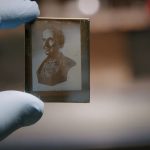
All you would need is a box, a few Fresnel lenses and some textured glass. The main idea is that you could get the texture of the glass projected on a seamless white (or any other smooth) background.
What makes this design really rock is the little tripod socket at the bottom, so you can simply place this behind your subject on a light stand and have a symmetrical background.
1. start with a cardboard box about 10.5" x 8.5" x 7". This size works well for the most strobes and for most Fresnel lenses. It is also small enough to remain pretty much hidden if carefully placed behind the subject.

2. To get a nice thrown background, you wanna have the glass placed at the focal length of the Fresnel lens. (yea, it is the same focal length from your camera lens). First you'll need to measure it. Here is how you do it: Place the lens between a light source and the floor, and move it up and down until it gives you a sharp dot of light on the floor. The distance from the floor to the lens is your focal length.

You want this value to be small so it the lens to glass distance can fit in the box. You can stack a few of those to reduce the focal length.
In the case below, a stack of 3 Fresnel magnifier lenses had a combined focal length of about 4". Glue foam-core guides in place to hold the glass samples near the focal plane of the lens
3. Cut foam-core windows that match the inner size of the box. Use hot-melt glue to secure the glass pieces to foam-core carriers

4. Now, to prepare the strobe housing. Craft foam around the opening for the flash helps prevent light from escaping. The ball bungee holds the flash in place. The wood block has a 1/4-20 T-Nut to help mounting this to a light stand.

5. As you can see, The ball bungee provide a strong grip for the strobe.

6. There are foam core flaps glued to the box flaps. The first foam-core flap goes to match the box flap and to provide some lift. The second foam-core flap goes on the second box flap and is a little extending a little bit. The last flap goes on top of the rift flap and extend all the way to the end of the second flap. Enter Binder, to close the box when using it.

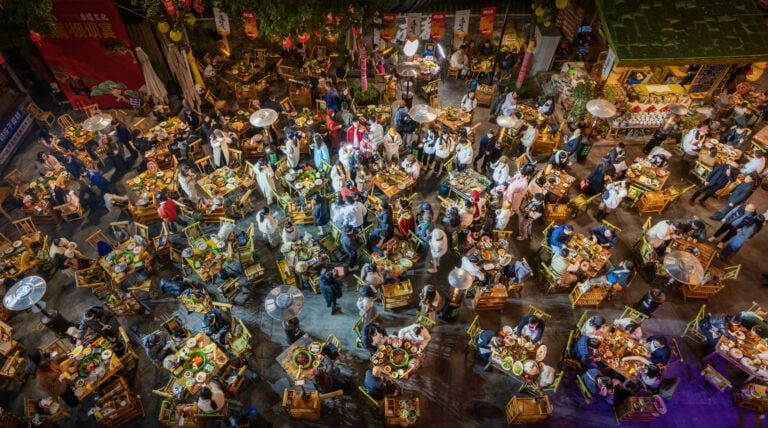
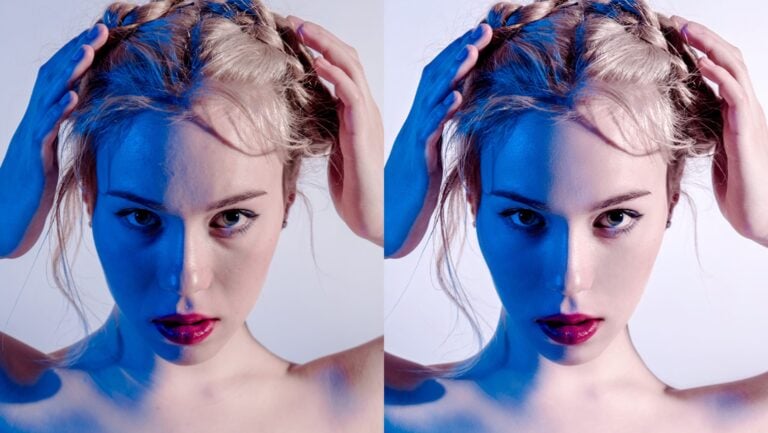
Here are two tests shots taken using two different sheets of glass.

We would love to see portraits using this technique pop up on our Flickr pool.
Get the DIYP greatness via RSS, newsletter and Twitter
Connect with the community: Facebook Page, Discussions
Share Ideas, Setups, Images and Projects on DIYP's Flickr, visit Readers Photos


Comments
Wow thats a neat idea I might
Wow thats a neat idea I might have to try it!
cardboard pattern projection -
anyone else remember the brilliant device made by charles Lewis (grand rapids, MI) in the mid 90s...
chuck lewis
I sure do remember charles lewis. His fresnel projector was awesome and I did a lot of portraits with it. It finally wore out and I salvaged the fresnel and built a new one of wood. I still use it today. Thanks Chuck!
Nice job.
Thanks for taking the time to put this together, Udi.
Here's the source I used for the glass
http://www.whittemoredurgin.com/textured.html
I bought the sample pack to experiment. I'll be getting some larger panes which will work better in the box. The small window vignettes on some of the samples.
can someone please post a video?
This description wasnt clear to me. can someone post a creation and use video. thanks!
also was the purple shot gelled or a purple seamless?
Color
Both shots were done on black seamless. The purple was a gelled flash.
Wondering...
Does it really require 3 fresnel lenses?
I was wondering if it would work if I only use one.
lenses
It's going to depend on the focal length of the lens you use. Just as with a camera, a longer focal length will give you a narrower field to project. You'll need a much longer box because you'll still need to have the glass at the focal point of the lens (more or less). I went with a short focal length so I could position the projector behind the subject if I wanted to.
I'm also looking for a glass lens to try to see if it would improve the projection, or give me better control.
Terrific use of available stuff!
That's a great idea, well thought out and good use of easily available materials. The idea of interchangeable panels opens up a million possibilities. I'm definitely going to try this out. Thanks for taking the time to post this up. Good stuff!
I can't wait to give this a
I can't wait to give this a shot! Looks like the results are awesome!
Brilliant idea!
Karl, this is really great. It's well conceived and executed. I love it and the possibilities are tremendous, not just textures, both gobo patterns should work well too. Thanks.
Great idea
Wow, it is a simple and perfect solution to create nice backgrounds. I want one. Nice
This is really an interesting
This is really an interesting project. I will definitely try it. I have really been struggling with my backgrounds. I think if I can master them, then I will feel more well rounded as a photographer.
Great idea, thanks!
I just ordered a bunch of fresnel lenses. I'm going to give this a try.
Great and inspiring idea!
The idea is really cool. I just have a question... I'm a beginner and don't really see how to synchronise the photo with the background creating flash - do I need a camera capable of remotely triggering the flash attached to the box?
Well, yes of course, either
Well, yes of course, either by a PC sync cord, a hotshoe radio trigger or an optical slave built into the flash or a separate slave cell.
Question
Can I use this device to actually show on the models? Is there a way to have those effects project on a larger scale? This seems to be really cool thnx for this!
Super-Size it
Just like any projector, the greater the distance between the projector and the object the image projected to, the larger the resulting image. It will also take more light to create a larger image.
An adjustment maybe?
This concept is fantastic, but I do not own a speedlight, or any sort of slave flash to do this with...is it possible to use a standard light source with this, such as a worklight or halogen system? I know halogen is exceedingly hot and could potentially burn things, but I also could use those "energy efficient" bulbs as well?
Just some thoughts. lol Otherwise a fantastic tutorial!
You could try a CFL bulb, but
You could try a CFL bulb, but those are generally quite large, and the larger the bulb, the more blur you'll see in the projected image, perhaps to the point where all texture is lost. I'd say CFL bulbs are not suitable.
I just don't think a CFL will
I just don't think a CFL will provide enough light for this to be useful. Maybe with a hellish-bright halogen, but you'll need to make the thing out of metal so it doesn't catch fire.
Karl, thanks for sharing this
Karl,
thanks for sharing this DIY of yours. I do use quite often the fresnel lens and in fact adapted it into my portable softboxes. The introduction of the tainted and decorative glass in between the fresnel and the flash is quite imaginative. I have quite a lot of these stacked in the office. With your idea, I can now make use of this when doing portraits too.
Thanks a lot.
Can you please put this in a
Can you please put this in a video form.....greatly appreciated.
I dont understand... i wish
I dont understand... i wish there were a video to explain everything, i dont know what those foam box flaps do and stuff... i need a better description of this otherwise awesome looking contraption :
The box is simply an
The box is simply an enclosure - one end holds the flash, the other end holds the lens, and at the focal point of the lens you place textured glass. No different in the fundementals than a slide projector. Just made for big slides and a wide projection angle.
Don't hold your breath waiting for a video. I'm way over-booked.
Post new comment