






The First AI Model Lawsuits Are Here, and Photographers Should Pay Attention
Jun 3, 2026
Alex Baker
Alex Baker is a portrait and lifestyle driven photographer based in Valencia, Spain. She works on a range of projects from commercial to fine art and has had work featured in publications such as The Daily Mail, Conde Nast Traveller and El Mundo, and has exhibited work across Europe
Share:
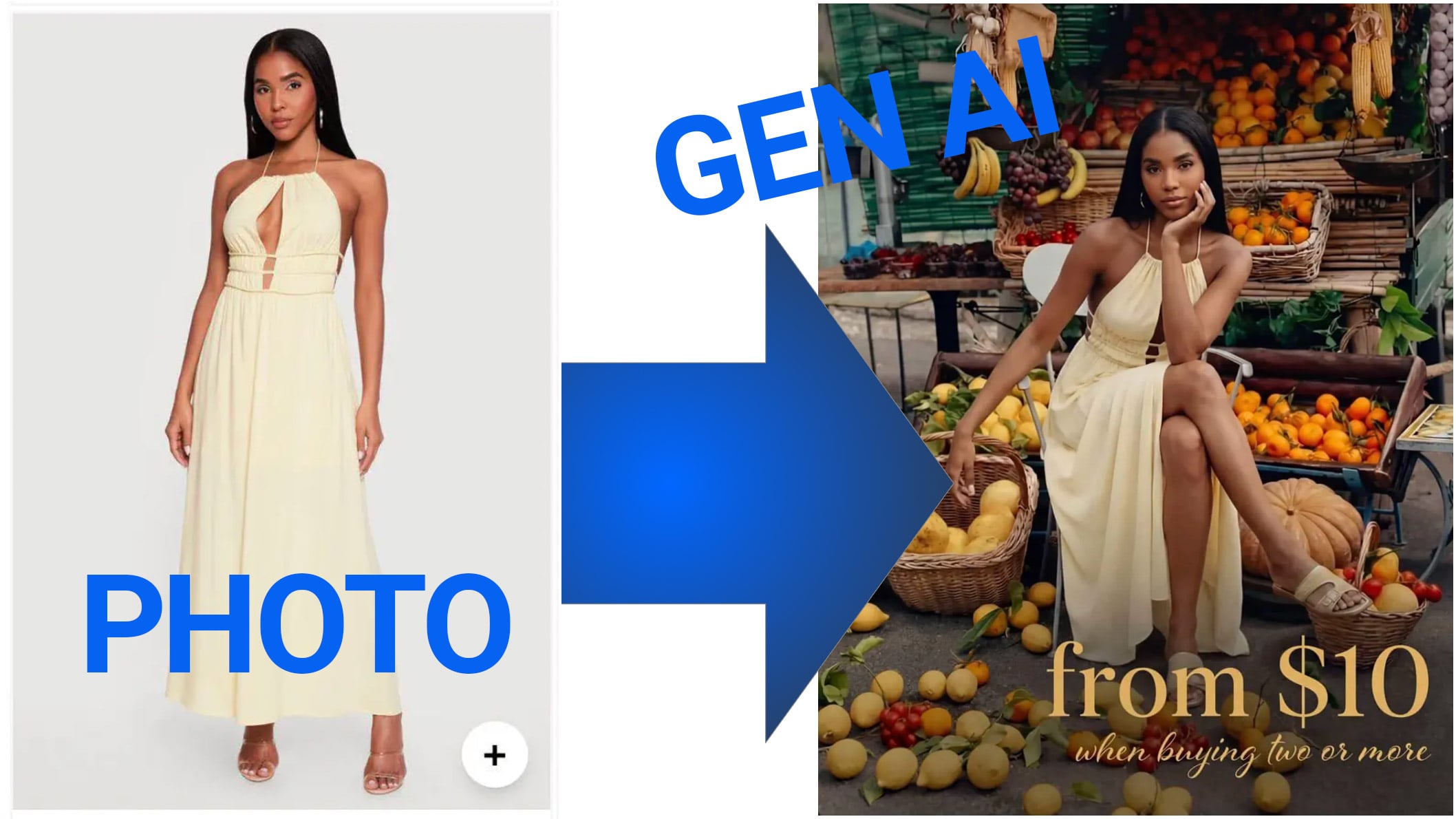
A New York fashion model has accused clothing retailer Rainbow Shops of using AI-generated versions of her likeness in advertising campaigns without her permission, raising fresh questions about how artificial intelligence is being used in commercial photography.
According to the New York Post, Francheska Pujols filed a lawsuit in the New York Supreme Court last month, claiming that Rainbow used photographs from a previous modelling contract to create entirely new AI-generated marketing images. According to the complaint, the resulting images placed her digital likeness into scenes and poses that were never photographed during the original shoots.
Pujols alleges that some of the AI-generated images were suggestive in nature and damaged her reputation as a professional fashion model. She also claimed that Rainbow continued using her likeness after her contract with the company had expired.
Rainbow Shops has denied any wrongdoing, stating that it used the images appropriately and did not violate the model’s rights. The lawsuit was initially filed in May in the New York Supreme Court but has since been withdrawn, with both sides reportedly seeking a private resolution.
New legislation
While the case itself appears to be moving behind closed doors, it arrives at a time when the fashion industry is already wrestling with how to regulate the use of AI-generated imagery. In New York, the Fashion Workers Act is set to come into force later this month. The legislation introduces stricter consent requirements around the creation and use of digital replicas, requiring written approval from models before their likeness can be cloned or reused in new content. It’s one of the first serious attempts to bring AI use in fashion advertising under clearer legal control.
For many working in the industry, the timing feels significant. Although high-end editorial campaigns and top-tier runway work are unlikely to vanish, there is growing concern that AI could drastically reshape the day-to-day commercial side of fashion photography. Catalogue shoots, e-commerce imagery, and fast-fashion campaigns (the kind of work that quietly sustains much of the industry) are seen as particularly vulnerable.
Cutting costs
The reason is simply efficiency and cost-cutting. If a single studio shoot can be turned into dozens or even hundreds of AI-generated campaign variations, brands may no longer need to commission repeated productions, location shoots or large creative teams to generate content at scale, and the impact extends far beyond models.
A typical fashion shoot is rarely just a photographer and a model. It’s a coordinated production involving assistants, stylists, hair and makeup artists, retouchers, set designers, producers and more. If AI begins to replace the need for repeat shoots, the effect is likely to ripple across the entire ecosystem of commercial photography.
Outdated contracts
This is also where existing contracts start to look increasingly outdated. Many licensing agreements were written long before generative AI became commercially viable, and do not explicitly address whether images can be used as source material for synthetic content or digital training datasets.
As a result, there is a growing argument within the industry that contracts may need to evolve in a similar way to those used in the film and television sector, where performers’ unions have already pushed for explicit protections around digital replicas and AI-generated performances.
In practical terms, that could mean photographers increasingly adding specific clauses to their agreements that prohibit the use of their images for AI generation unless separately negotiated and compensated. Without that clarity, a single commissioned shoot could potentially become the foundation for unlimited derivative content that was never accounted for in the original pricing.
Unethical
You might think that customers would respond with a backlash against the use of AI like this, as has happened recently when Coca-Cola used AI to create their Christmas ad. However, the quality of AI-generated images is improving extremely rapidly to the point where we will soon not be able to tell the difference. Indeed, these photos of Pujol illustrate that extremely well.
It figures, however, that the fashion brands now employing these AI-generated images are also those that use sweatshop labour to produce the clothing. The throwaway fashion industry is also extremely water-intensive, just like AI data centres, so clearly there are bigger issues here than just the unethical use of AI.
Whether this particular case becomes a turning point or simply another early dispute in a rapidly changing landscape remains to be seen. But it highlights a broader reality the photography industry is already facing: AI is not just changing how images are made, it is changing what images are worth, and who gets paid when they are reused in ways nobody originally planned for.
[via petapixel]

Alex Baker
Alex Baker is a portrait and lifestyle driven photographer based in Valencia, Spain. She works on a range of projects from commercial to fine art and has had work featured in publications such as The Daily Mail, Conde Nast Traveller and El Mundo, and has exhibited work across Europe



Join the Discussion
DIYP Comment Policy
Be nice, be on-topic, no personal information or flames.