





















Apple’s New AI Tools Can Reframe and Extend Your Photos After Capture
Jun 9, 2026
Alysa Gavilan
Alysa Gavilan has spent years exploring photography through photojournalism and street scenes. She enjoys working with both film and mirrorless cameras, and her fascination with the craft has grown over the decades. Inspired by Vivian Maier, she is drawn to capturing everyday moments that often go unnoticed.
Share:

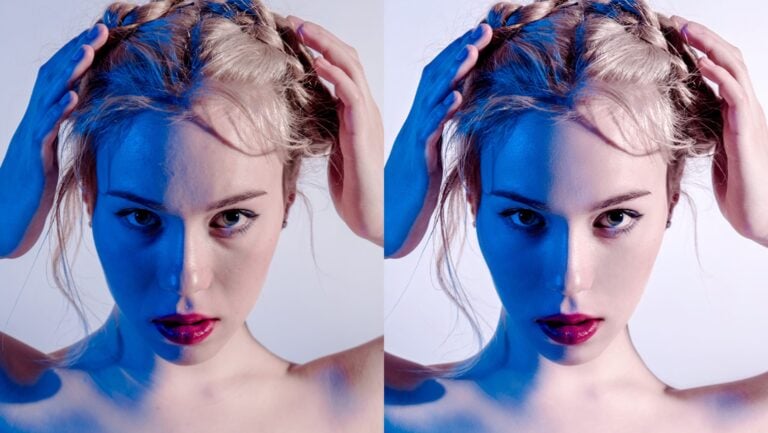
Photo editing is becoming less about fixing mistakes and more about reshaping an image after it is taken. At the Worldwide Developers Conference (WWDC), Apple unveiled a new suite of AI-powered tools that can reframe compositions, extend scenes beyond their original edges, and remove unwanted elements with increasing sophistication.
At the center of the announcement are several new features coming to the Photos app through Apple Intelligence. These include Spatial Reframing, an upgraded Clean Up tool, and a new Extend feature that uses generative AI to fill in parts of an image beyond its original boundaries.
Together, they represent Apple’s latest effort to integrate AI more deeply into everyday photography workflows while maintaining a strong focus on privacy and transparency.
AI Editing Comes To The Photos App
Among the most notable additions is Spatial Reframing, which allows users to adjust the composition of an image after it has been captured.
Rather than simply cropping a photo, Spatial Reframing uses AI to simulate a different camera position within the original scene. Users can drag an image and preview perspective changes in real time. Apple says the system generates new visual information only in areas where the perspective has shifted, helping maintain consistency with the original photograph.
The feature builds on technology developed for the company’s spatial computing efforts, particularly work associated with the Vision Pro platform.

Also arriving is Extend, a tool designed to expand an image beyond its original borders. Similar to generative expansion features already available in other editing platforms, Extend can add new image content around a frame, allowing users to straighten horizons, alter aspect ratios, or create additional space around a subject without cropping important elements.
Meanwhile, Apple’s existing Clean Up tool is receiving an upgrade aimed at producing more natural-looking results when removing distractions from a scene. According to the company, the updated version delivers improved infill quality, especially in more complex images where object removal has traditionally been difficult.
Apple Adds AI Watermarking To Edited Photos
One aspect that may be particularly relevant to photographers is Apple’s decision to automatically apply a hidden SynthID watermark to images edited with Apple Intelligence.
The watermark is intended to identify photographs that have undergone AI-assisted modifications while remaining invisible during normal viewing. The move comes as technology companies face growing pressure to provide transparency around AI-generated and AI-altered content.
While invisible watermarking is not a perfect solution, it reflects a broader industry effort to establish provenance systems and disclosure mechanisms as generative editing tools become more capable.

A Familiar Direction For The Industry
Apple’s latest additions arrive as major technology and imaging companies continue to expand generative editing capabilities.
Adobe has introduced tools such as Generative Fill and Generative Expand in Photoshop, allowing users to add or remove image content using AI.
Google has also brought similar editing capabilities to its Pixel devices and Google Photos ecosystem. Across the industry, companies are working to make advanced editing tools available directly within consumer devices rather than limiting them to professional software.
Apple’s approach differs in part because of its emphasis on integrating these features directly into the operating system and pairing them with disclosure measures such as SynthID watermarking.

Privacy Remains A Key Part Of Apple’s Pitch
Alongside the editing tools, Apple devoted significant attention to the underlying AI infrastructure powering Apple Intelligence.
The company said its next-generation Apple Foundation Models were developed in collaboration with Google’s Gemini technologies and operate through a combination of on-device processing and Apple’s Private Cloud Compute system.
Apple maintains that user data processed through Private Cloud Compute is not stored or made accessible to Apple or third parties. The company also says outside experts can independently verify those privacy claims.
Privacy has become a major point of competition in the AI race, particularly as many advanced image editing systems rely heavily on cloud processing.
The technology continues to become more powerful, but so do the questions surrounding authenticity, disclosure, and how much of a photograph should remain untouched after the shutter is pressed. How photographers and audiences respond may prove just as important as the technology itself.

Alysa Gavilan
Alysa Gavilan has spent years exploring photography through photojournalism and street scenes. She enjoys working with both film and mirrorless cameras, and her fascination with the craft has grown over the decades. Inspired by Vivian Maier, she is drawn to capturing everyday moments that often go unnoticed.
Related Posts
 Skylum’s new Luminar Flex plugin brings Luminar AI tools to Photoshop, Lightroom, and Apple Photos
 This handy guide offers five tips to extend the life of your Godox and other Lithium-Ion batteries
 A real softbox for LED lights (and how to extend an Osmo)
 Use these eight tips to extend battery life in your mirrorless camera
Join the Discussion
DIYP Comment Policy
Be nice, be on-topic, no personal information or flames.